Ibiza on Any Budget: What You’ll Actually Spend
Spend a weekend in Ibiza and you could blow through €5,000 without blinking. Spend a week there and, if you’re smart about it, €700 might be enough. The island has a reputation for excess, but that reputation is only half the story. What Ibiza actually costs depends almost entirely on the choices you make before you even land.
Here’s an honest breakdown.
How Much Does a Day in Ibiza Cost?
The short answer: anywhere between €60 and €800, depending on how you want to live.
Traveling on a tight budget, you’re looking at roughly €150 a day. That covers a hostel bed, supermarket food, public buses, and the occasional beer at a bar that doesn’t have a DJ and a dress code. It’s not glamorous, but Ibiza has enough natural beauty that you won’t feel like you’re missing out.
A more comfortable mid-range experience runs €350 to €400 a day. A decent hotel or a share of a rented villa, a mix of home cooking and restaurant dinners, a hire car for a few days, and one or two nights out. This is how most visitors actually experience the island.
At the top end, €700 a day and upward gets you boutique accommodation, fine dining, beach club sunbeds with waiter service, and VIP access. There is no ceiling here if you’re not looking for one.
For comparison: Ibiza is more expensive than Barcelona, roughly on par with Mykonos, and cheaper than Saint-Tropez or Monaco. A cocktail that costs €9 in Barcelona will cost you €18 at an Ibiza beach club. That’s not a rip-off, it’s the price of the view, the sound system, and the fact that half the people around you flew in specifically for the weekend.
Where You Sleep
Accommodation is usually where the biggest decisions get made.
Villas
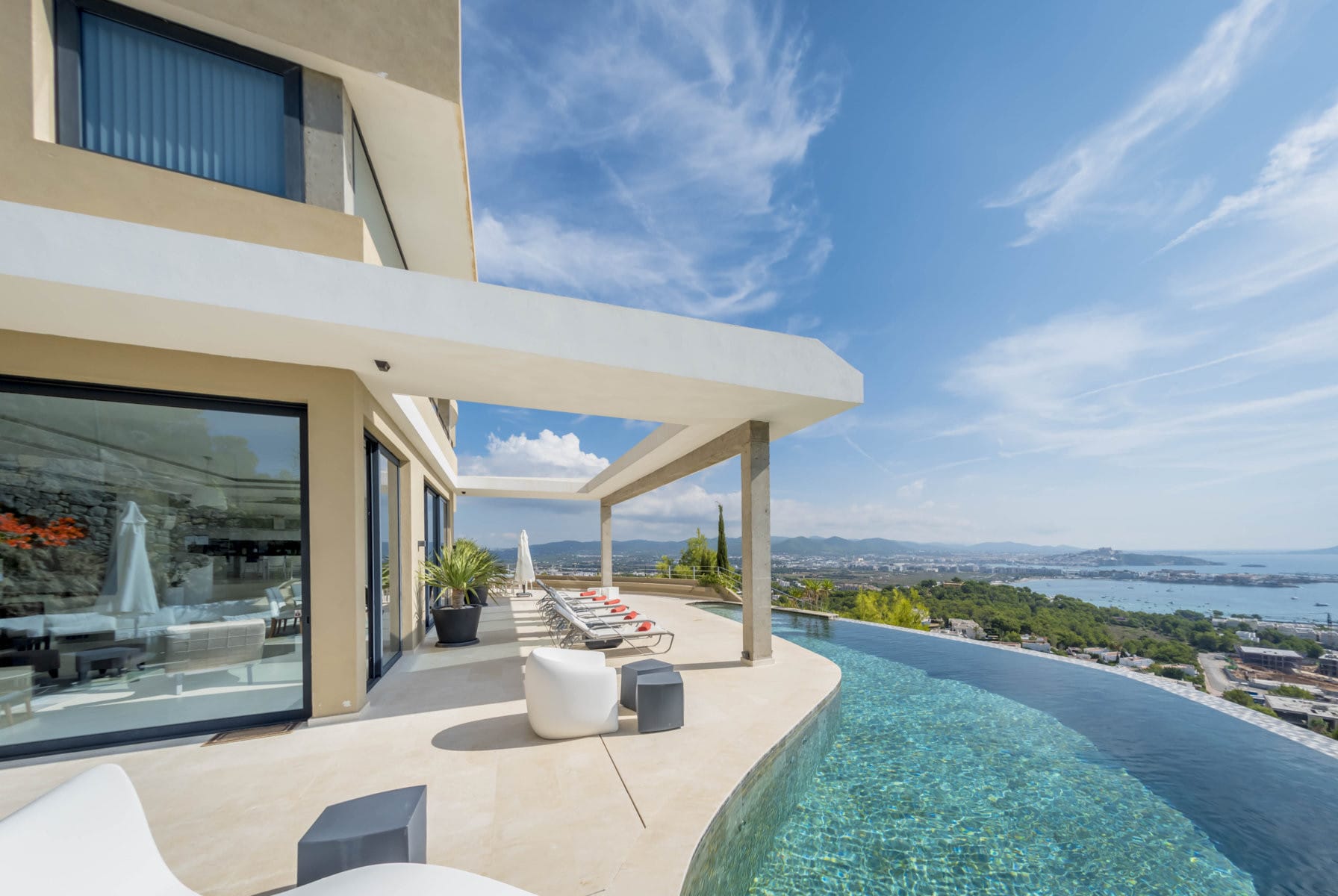
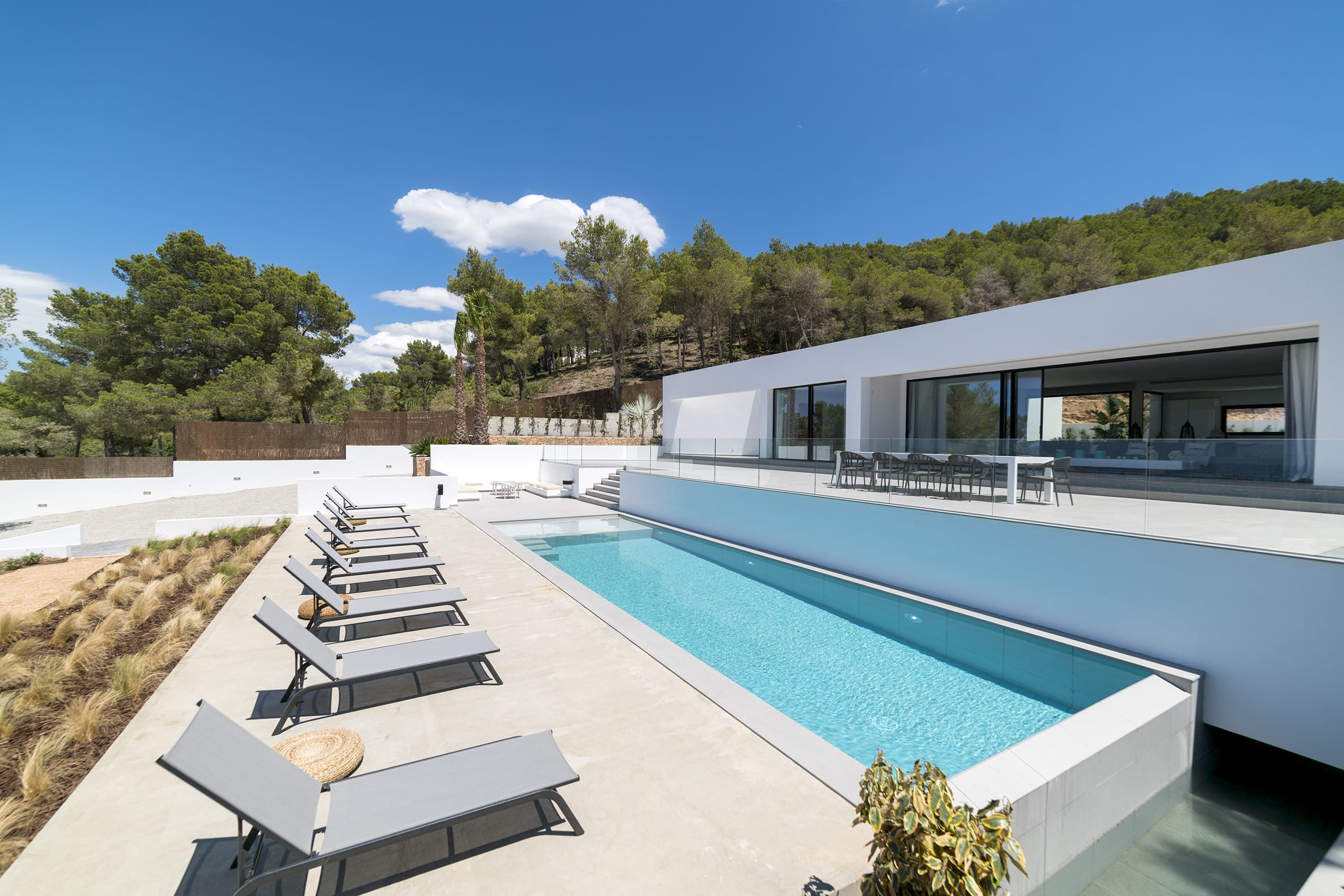
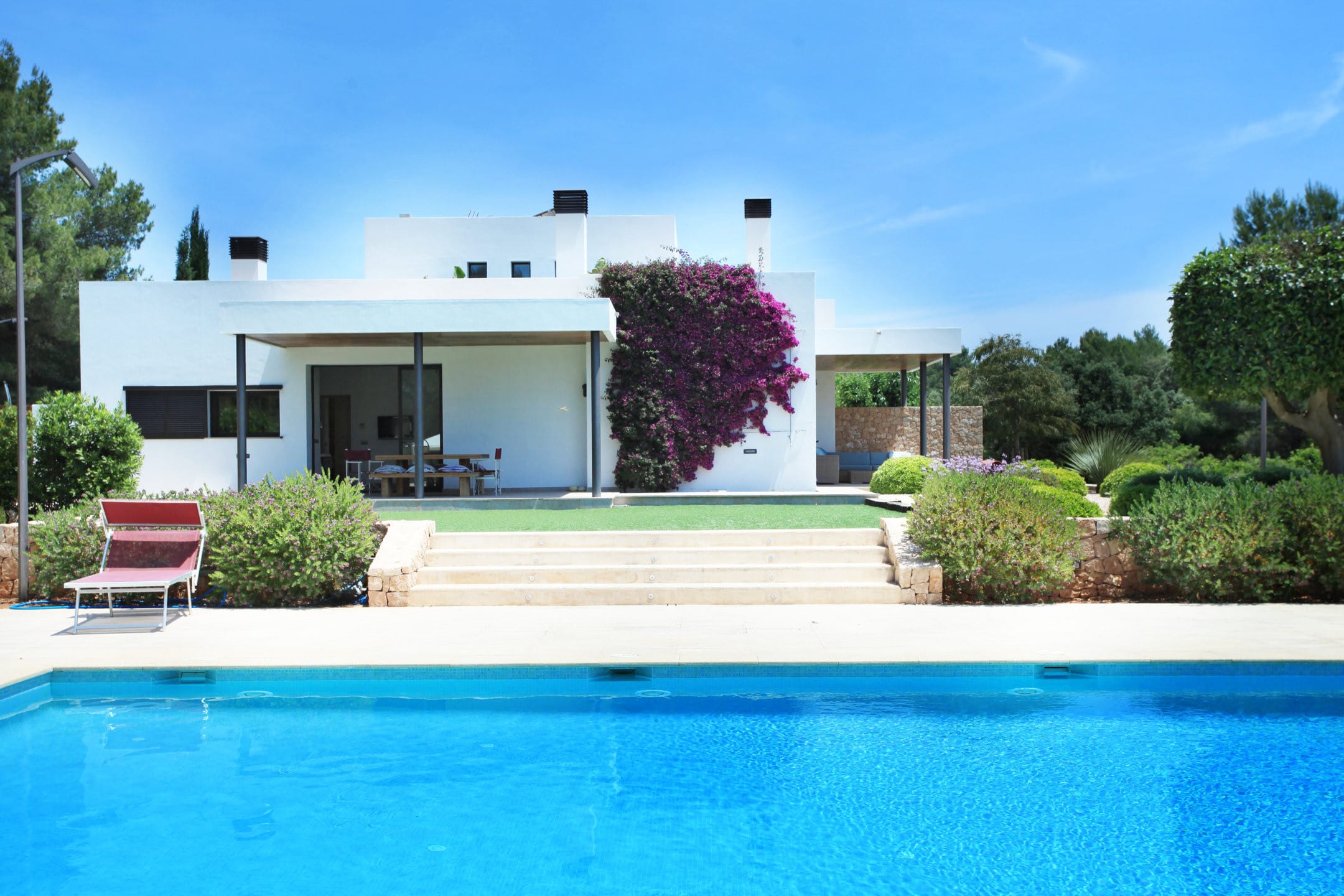
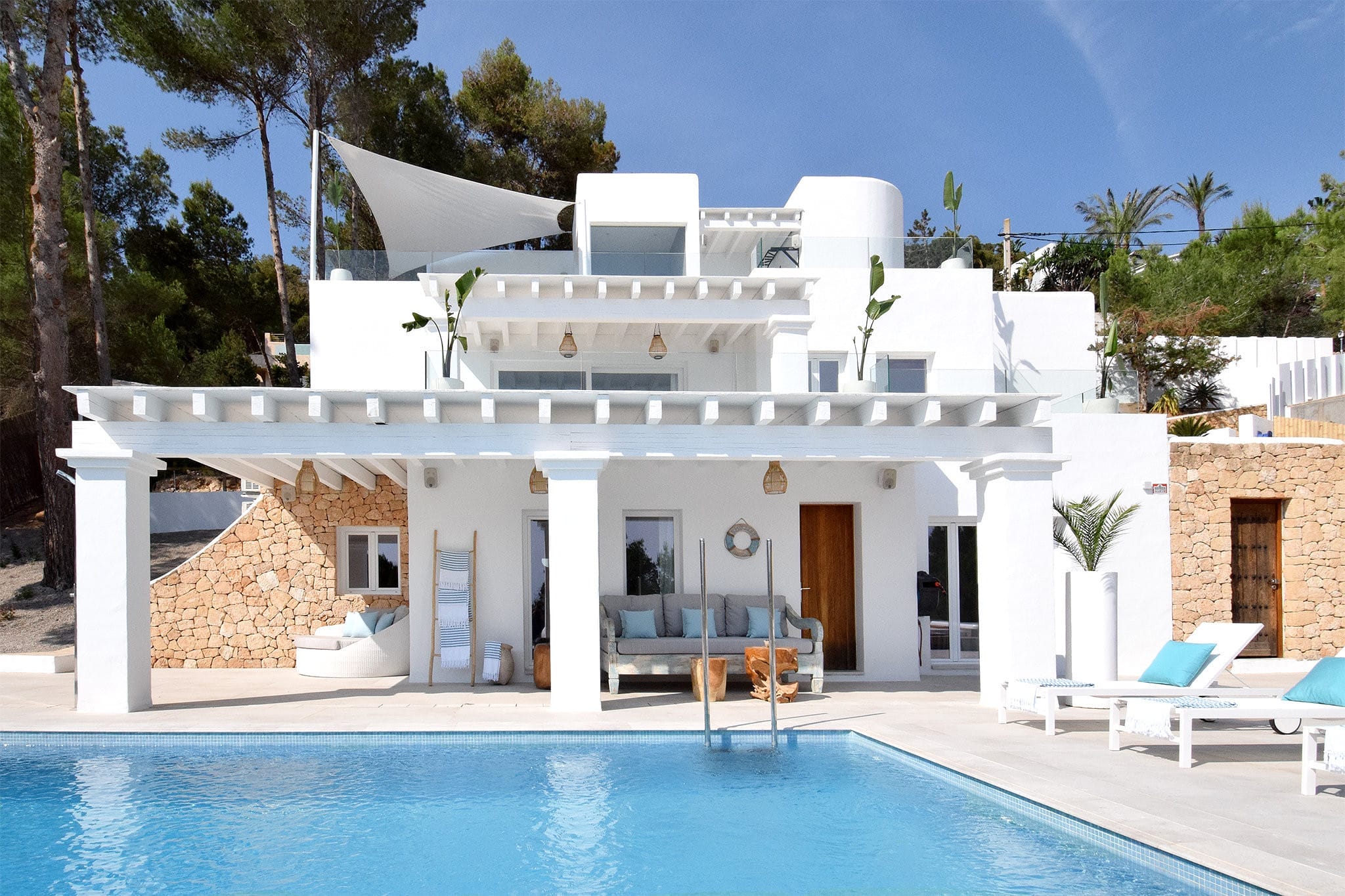
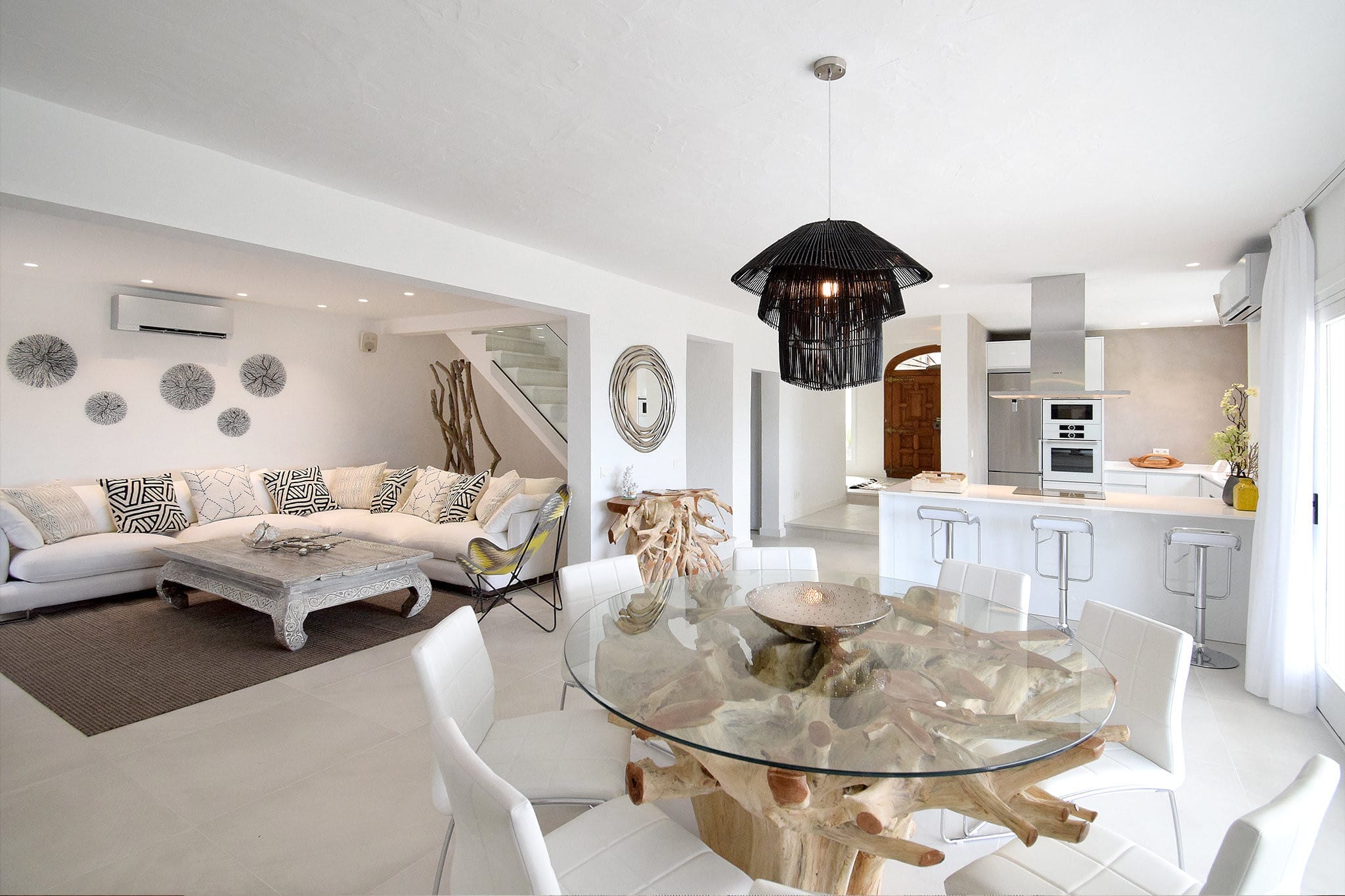
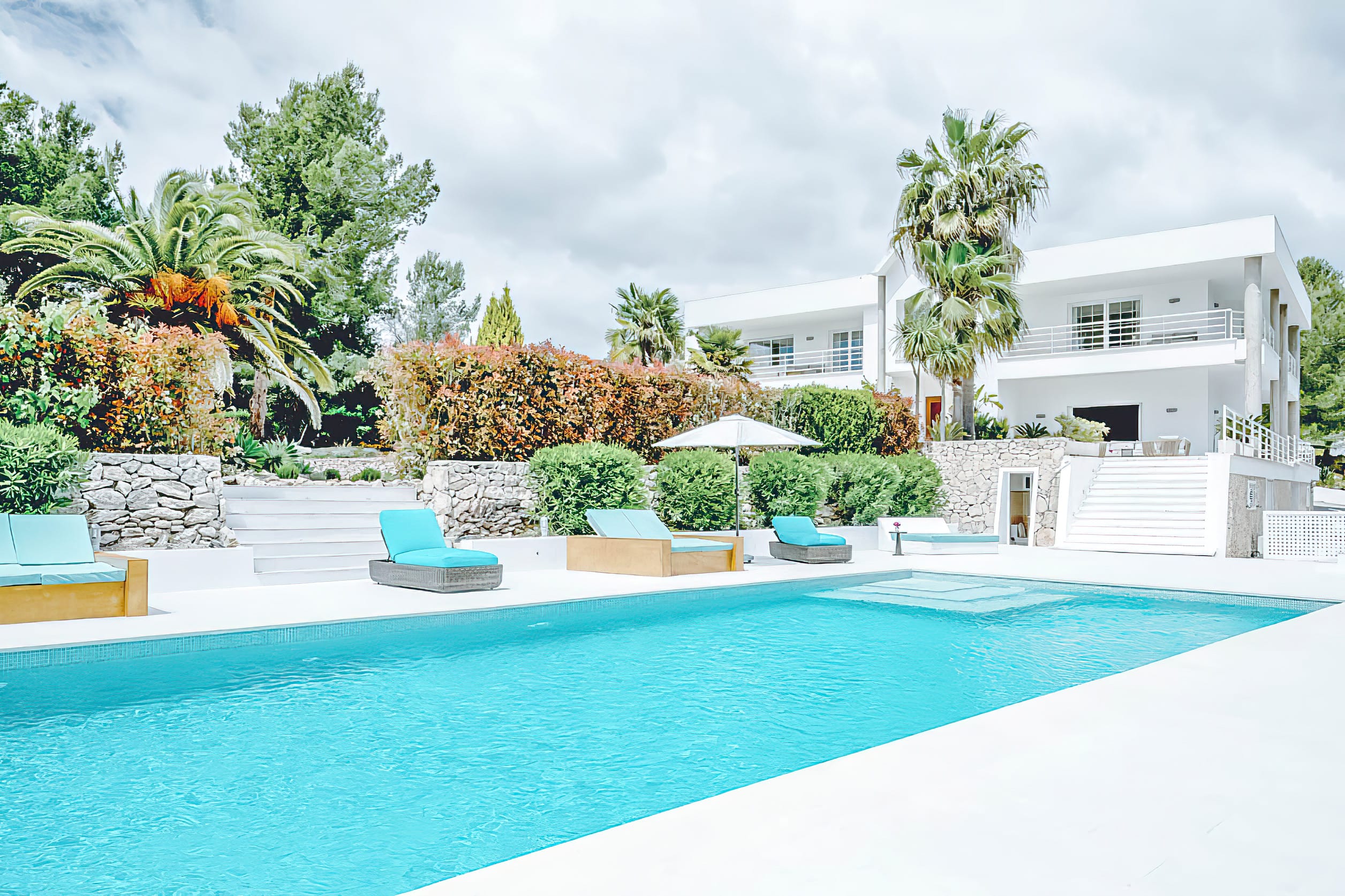
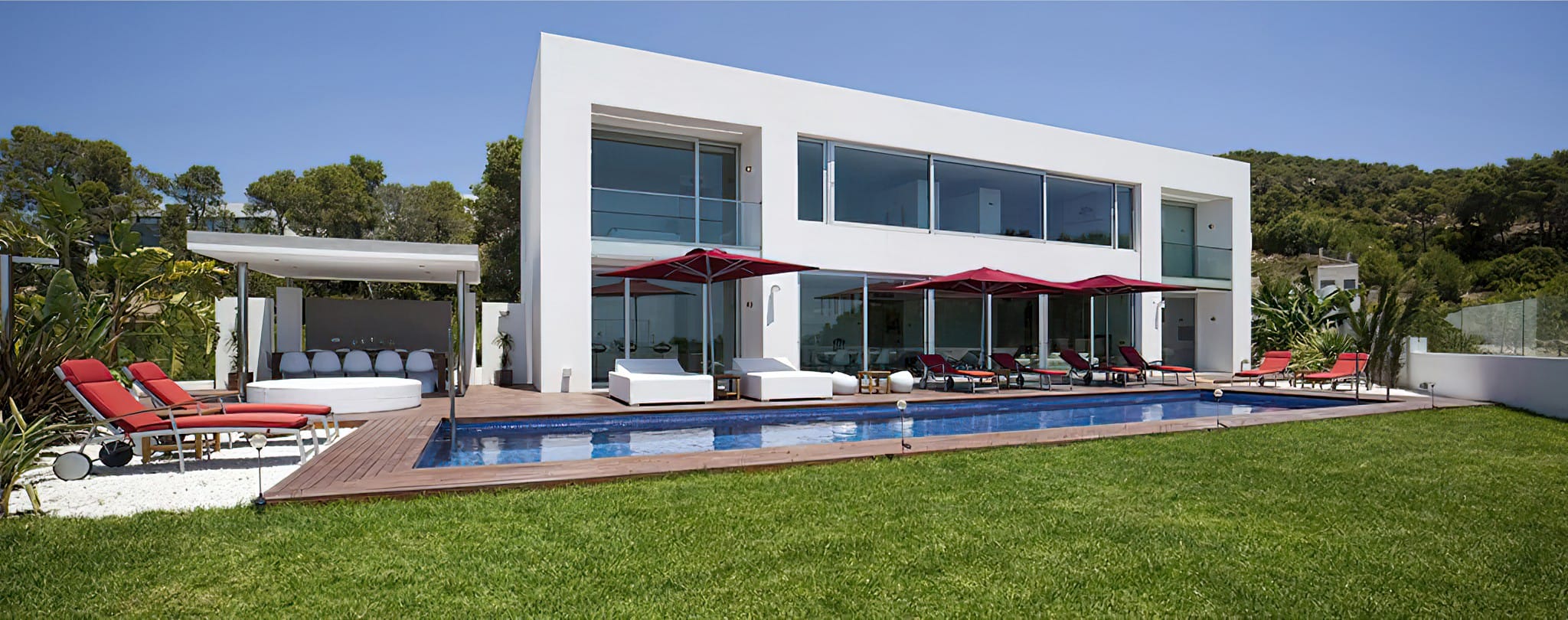
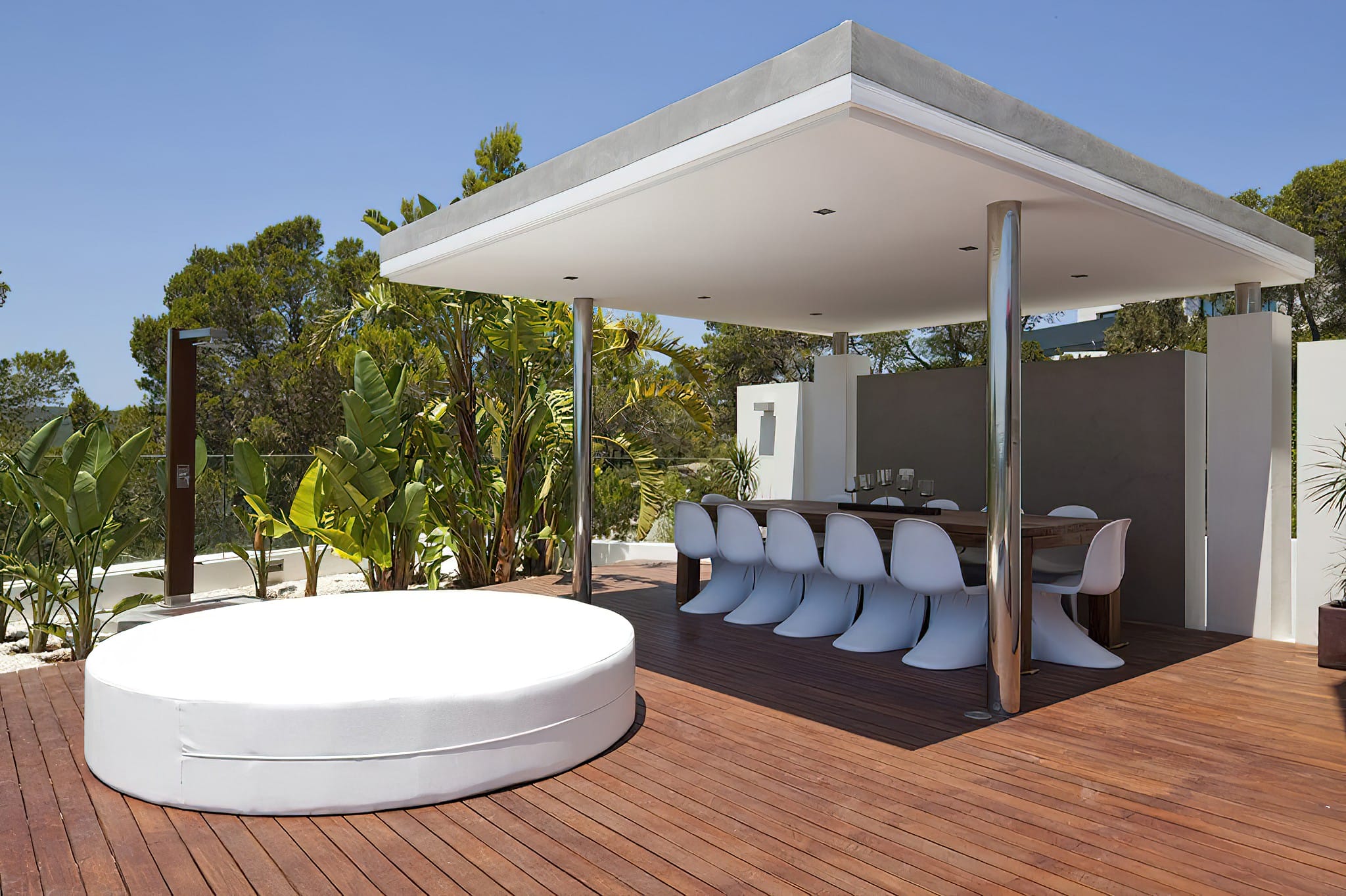
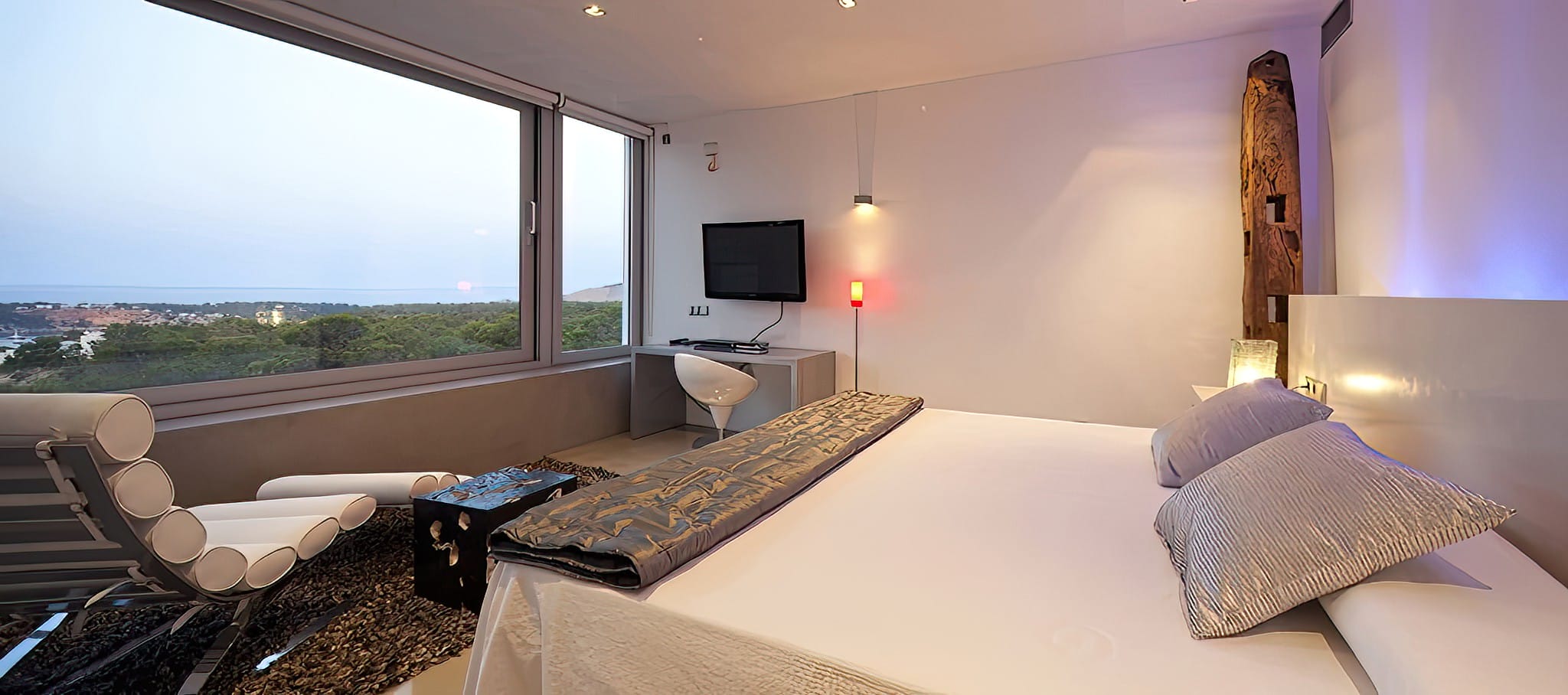
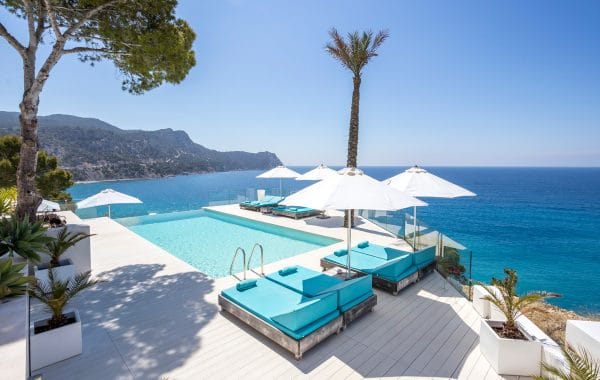
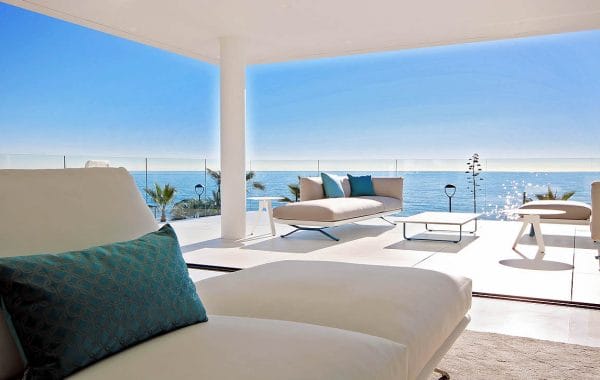
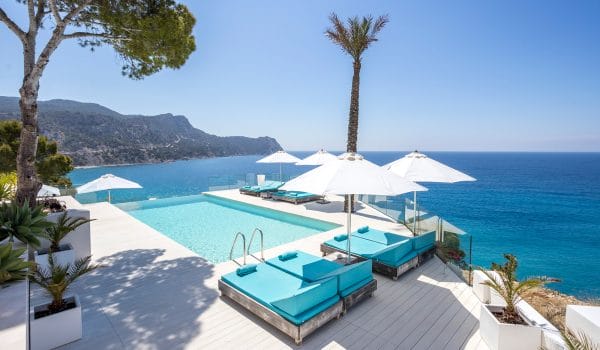
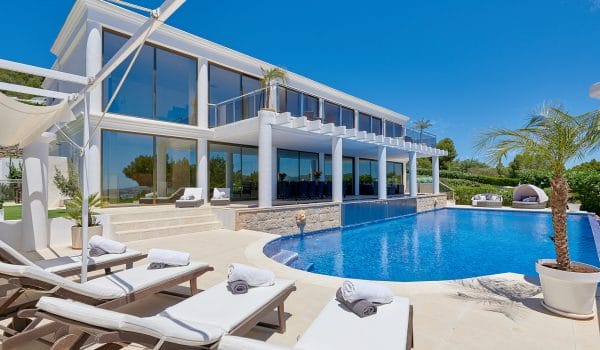
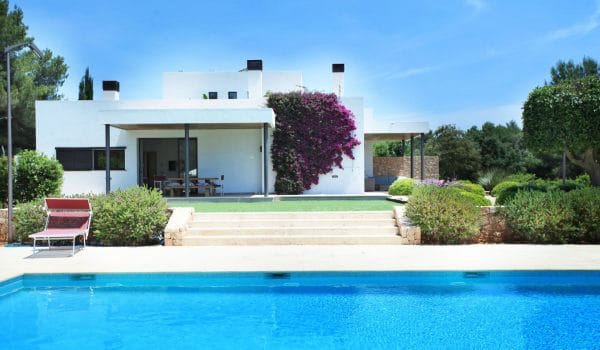
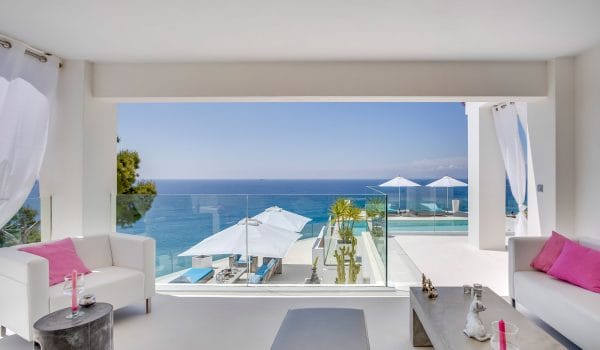
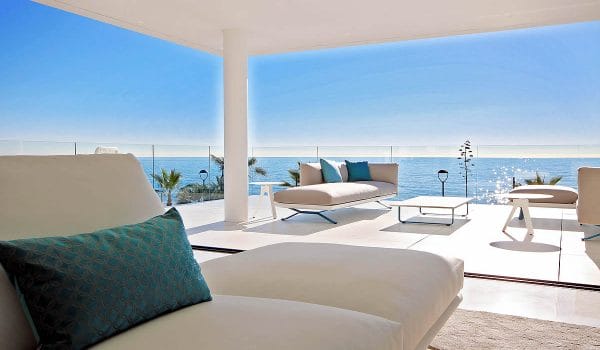
Villas are the most popular choice for groups, and for good reason. A basic inland villa sleeping six costs €1,200 to €2,000 a week in peak season. Split six ways, that’s roughly €50 per person per night, which is hard to beat anywhere in Western Europe in July. Mid-range villas with a pool and a better location run €2,500 to €5,000 a week. Luxury properties with sea views and concierge service start around €6,000 and climb steeply from there.
Hotels
Hotels follow predictable patterns. A decent three-star in high summer will cost €120 to €200 a night. Boutique properties in Ibiza Town or the countryside run €250 to €500. Five-star options go well beyond that.
When and How to Book
The single most effective way to reduce accommodation costs is to avoid July and August entirely. The same villa in October costs 40 to 50 percent less. The weather is still excellent, the sea is warm, and many of the clubs and restaurants are still open through mid-October.
Book early. Properties worth staying in fill up fast. Waiting until a few weeks before your trip in peak season means paying a premium for whatever is left.
Getting Around
Ibiza is small enough that getting around is manageable, but your transport choices will add up.
Getting There
Flights vary enormously. Budget airlines connect Ibiza to most major European cities, and fares from London or Barcelona can be as low as €50 return if you book months ahead. Leave it until summer and the same flight costs €300 to €400. Ferries from Valencia or Barcelona run €50 to €80 and let you bring a car, which can offset the cost of renting one on the island.
Getting Around the Island
Hiring a car costs €30 to €40 a day in shoulder season and €60 to €80 in July and August. A scooter is cheaper at €20 to €35 a day. Public buses cover the main routes for €2 to €4 per trip and are perfectly adequate for beach days. Taxis between towns cost €20 to €40, which adds up quickly if you rely on them regularly.
A practical approach: hire a car for two or three days to explore the quieter parts of the island, use buses when you’re heading to a beach and don’t need flexibility, and only take taxis when there’s no reasonable alternative.
Food and Drink
Ibiza can be very cheap or very expensive to eat in, and often both on the same day.
Day-to-Day Eating
A full shop at Mercadona or Lidl for two people, covering breakfast and lunch supplies, runs €30 to €50. Lunch at a local bar in a town that hasn’t been entirely colonized by tourism costs €12 to €15 including a drink. A proper sit-down dinner with wine at a mid-range restaurant, €40 to €60 per person. A meal at a beach club or a high-end restaurant, easily €100 per person before you’ve touched the wine list.
The strategy most experienced visitors settle on is self-catering for breakfast and lunch, then spending properly on one good dinner. It keeps the day’s food costs reasonable while still letting you enjoy what is, in many cases, genuinely excellent cooking.
Beach Clubs
Beach clubs are a category of their own. A sunbed for the day often requires a minimum spend of €50 to €150 in a standard spot, rising to €300 or more for premium positions. Drinks cost €15 to €25 each. A shared seafood platter typically runs €70 to €100. None of this is unreasonable if you treat it as an occasional experience rather than a daily routine. Go once, enjoy it, and then go back to the public beach the next day.
Nightlife
This is where Ibiza’s reputation was built, and where budgets most often collapse.
What It Costs to Go Out
Entry to the main clubs runs €50 to €100 on a standard night and €120 to €150 for opening and closing parties or headline bookings. Buying tickets in advance saves €10 to €20. Inside, a spirit and mixer costs €18 to €26, a beer €16, and a bottle of water €13. Bottle service at a VIP table starts around €800 for a group and rises quickly.
Going Out Without the Damage
If you want to go to the clubs without the financial damage, the approach is straightforward: drink before you go, buy tickets early, and set a limit on what you’ll spend inside. Two or three drinks maximum. A night that would cost €250 without any thought becomes €130 with a little planning.
Free and Low-Cost Alternatives
It is also worth knowing that the island offers plenty outside the clubs. Sunset sessions at outdoor bars cost nothing if you’re standing. The drum circle at Benirras Beach, the markets at Las Dalias, hiking to a cove you found on a map: none of these cost anything significant, and they are often what people remember most.
A Week in Ibiza: Three Scenarios
Budget: Around €1,200
You’re in a hostel dorm, eating mostly from supermarkets with a couple of meals out, getting around by bus, and going out once to a smaller venue or buying presale for a bigger club.
Mid-Range: Around €2,600
You’re in a comfortable hotel or sharing a villa, eating well with a mix of cooking and restaurants, renting a scooter for most of the trip, doing two nights out, and spending a day at a beach club.
Luxury: €5,000 and Up
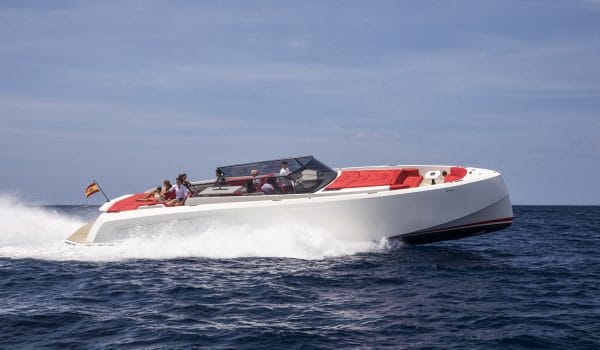
You have a private villa or boutique hotel, you’re eating at proper restaurants most nights, you have a car throughout, you’re doing VIP or at least avoiding the queue, and you have room for a boat trip or a private experience.
All three versions of the week are real, and all three are worth having. The island doesn’t discriminate.
A Note on Timing and Planning
Post-pandemic price increases have been significant. Accommodation is running 25 to 30 percent above 2019 levels. Restaurant prices have climbed similarly. This isn’t unique to Ibiza, but it’s worth accounting for if your mental benchmark is from a trip five or more years ago.
May, June, September, and October remain the best months for value. Prices drop substantially, crowds thin out, and the essential character of the island stays intact. If the main clubs and the peak-season social scene aren’t your priority, October in particular is one of the best times to be there.
The Bottom Line
Ibiza is expensive if you let it be. It doesn’t have to be. Plan ahead, travel outside the peak months where possible, share accommodation costs with a group, cook most of your own meals, and choose your splurges deliberately rather than impulsively. Done that way, the island is not only affordable, it’s exceptional value for what it offers.
The people who come back saying Ibiza cost them a fortune usually didn’t plan. The ones who come back saying it was worth every cent usually did.