Buying a House in Ibiza as a Foreigner: The Complete Guide 2026 Updated guide for European, and non-EU buyers
Introduction: Why Ibiza is still a market of its own Ibiza is not just an island. It is a global brand, a cultural ecosystem, and — for those who know how to navigate it — one of the most solid real estate opportunities in the Mediterranean.
Prices remain constant. Demand persists.
And the tourist license, increasingly rare, has turned into an asset in itself.
But buying a house in Ibiza as a foreigner is not as simple as signing a preliminary agreement at the bar. There are tax regulations, bureaucratic procedures, licensing restrictions, and legal pitfalls that cost dearly every year to those who are not informed.
This guide will accompany you step by step: from the first inspection to the final deed, with everything in between.
1. Can foreigners buy a house in Ibiza? Can foreigners buy a house in Ibiza?
The short answer is yes, without any particular restrictions.
Spain is one of the European countries most open to real estate purchases by foreigners. There are no limits on the nationality of the buyer, nor quotas on the purchase of primary or secondary homes. Both EU citizens and non-EU citizens can buy freely.
However, there is an important practical distinction:
EU citizens : the process is almost identical to that for Spanish citizens. No preliminary permit, no special authorisation. You obtain the NIE and proceed.
Non-EU citizens: the process is the same from a real estate perspective, but those who also intend to reside will need to consider the visa issue separately. The purchase of a property valued at over 500,000 euros entitles the buyer to apply for the Spanish Golden Visa, a topic we will address separately.
2. The NIE: the document on which everything depends
The NIE — Número de Identificación de Extranjero — is the Spanish tax identification number for non-citizens. It is the first document to obtain, without which nothing moves: you don’t sign a contract, you don’t open a bank account in Spain, you don’t pay a tax.
How to obtain it:
You can request it in three ways:
Directly in Spain, at the Oficina de Extranjería or in an authorised police station. In Ibiza, the competent office is located in Eivissa city. You need to make an appointment (often with weeks of waiting) and present yourself with a passport, completed EX-15 form, reason for use, and a stamp.
Through the competent Spanish Consulate. The processing times vary greatly from one office to another. Some issue the NIE in a few days, others take weeks. Check the processing times at your consulate first.
Through a lawyer with power of attorney. If you have already identified a property and time is tight, you can delegate a Spanish lawyer who will act on your behalf. It is the fastest method and often the most recommended.
Practical advice: Request the NIE as soon as you are serious about the intention to purchase. Doing it before finding the property will save you unnecessary delays in the crucial stages.
3. The Spanish bank account: does it really help?
Technically no, but in practice yes.
Most notaries and agencies require that the payment be made from a bank account in the name of the buyer at a Spanish bank. This simplifies the tracking of funds, is a well-established anti-money laundering requirement, and greatly speeds up the processes.
The banks most commonly used by foreigners in Ibiza are Santander, CaixaBank, and BBVA. Opening an account requires a passport, NIE, and often proof of income or assets. With the NIE in hand, the process is quick.
Alternatively, some international banks with branches in Spain (such as Sabadell or Deutsche Bank España) are used to working with foreign clients and have more streamlined procedures for non-residents.
4. The real estate market in Ibiza in 2026: what you will find
Before talking about contracts and taxes, it is useful to have a clear picture of the market.
The prices:
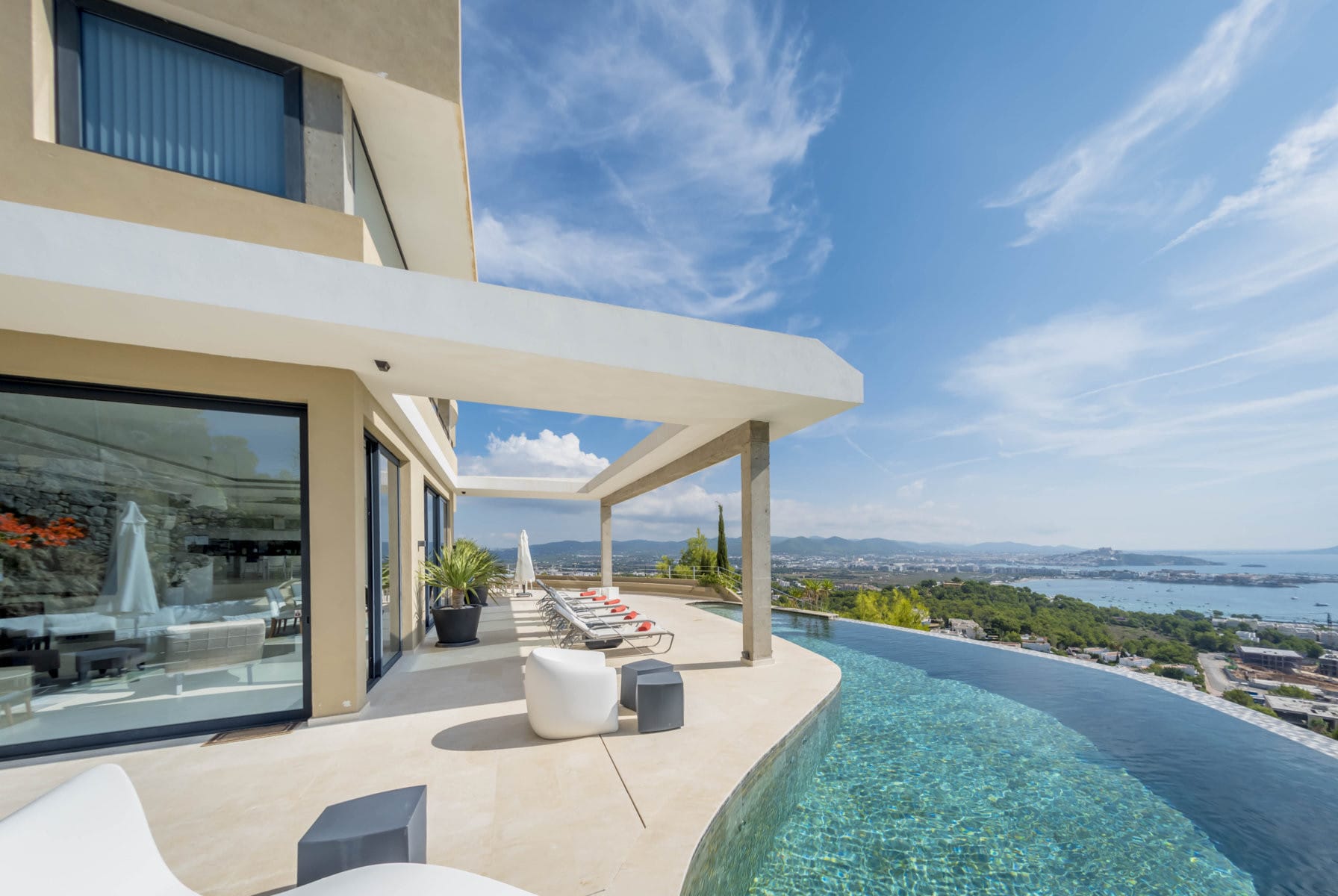
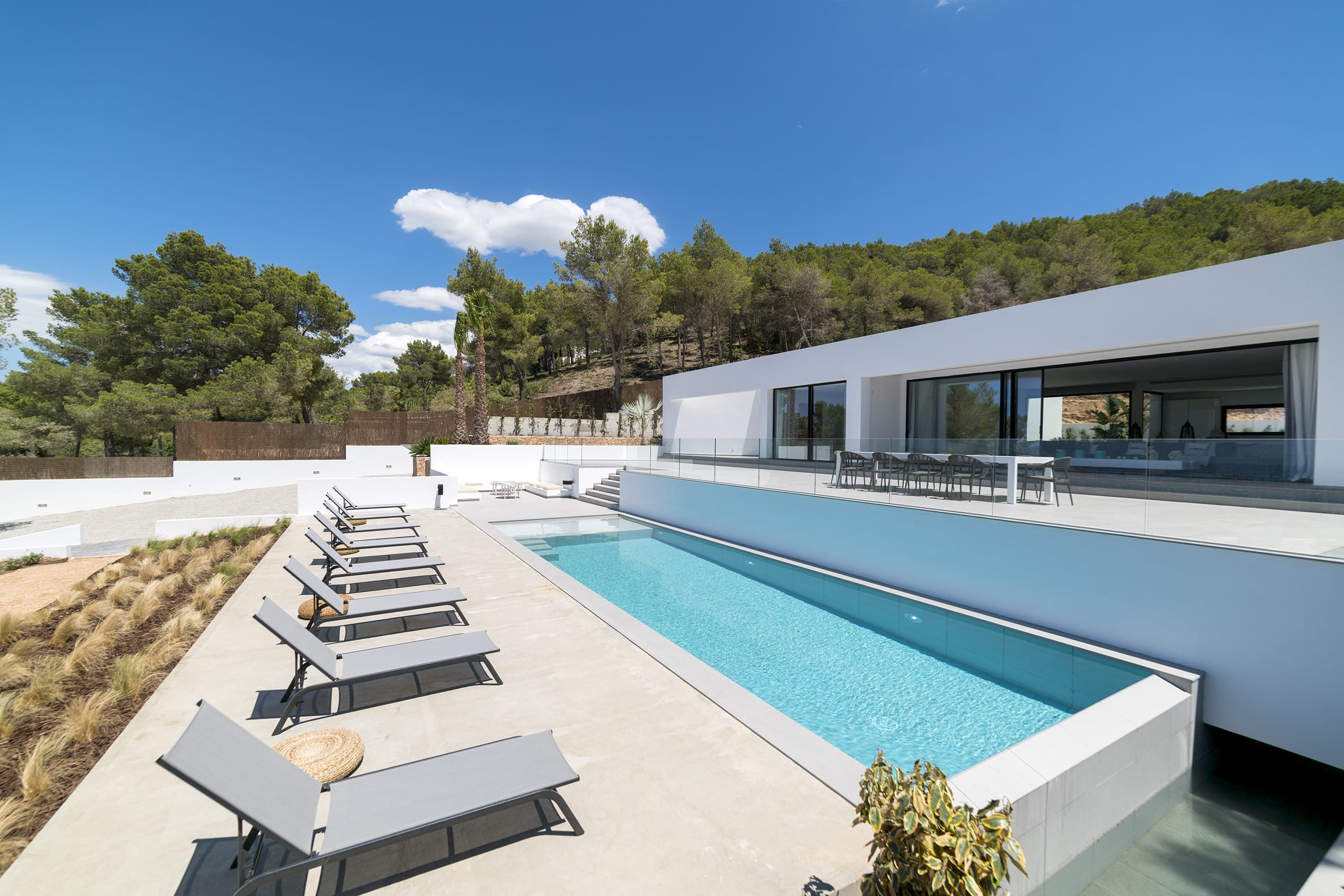
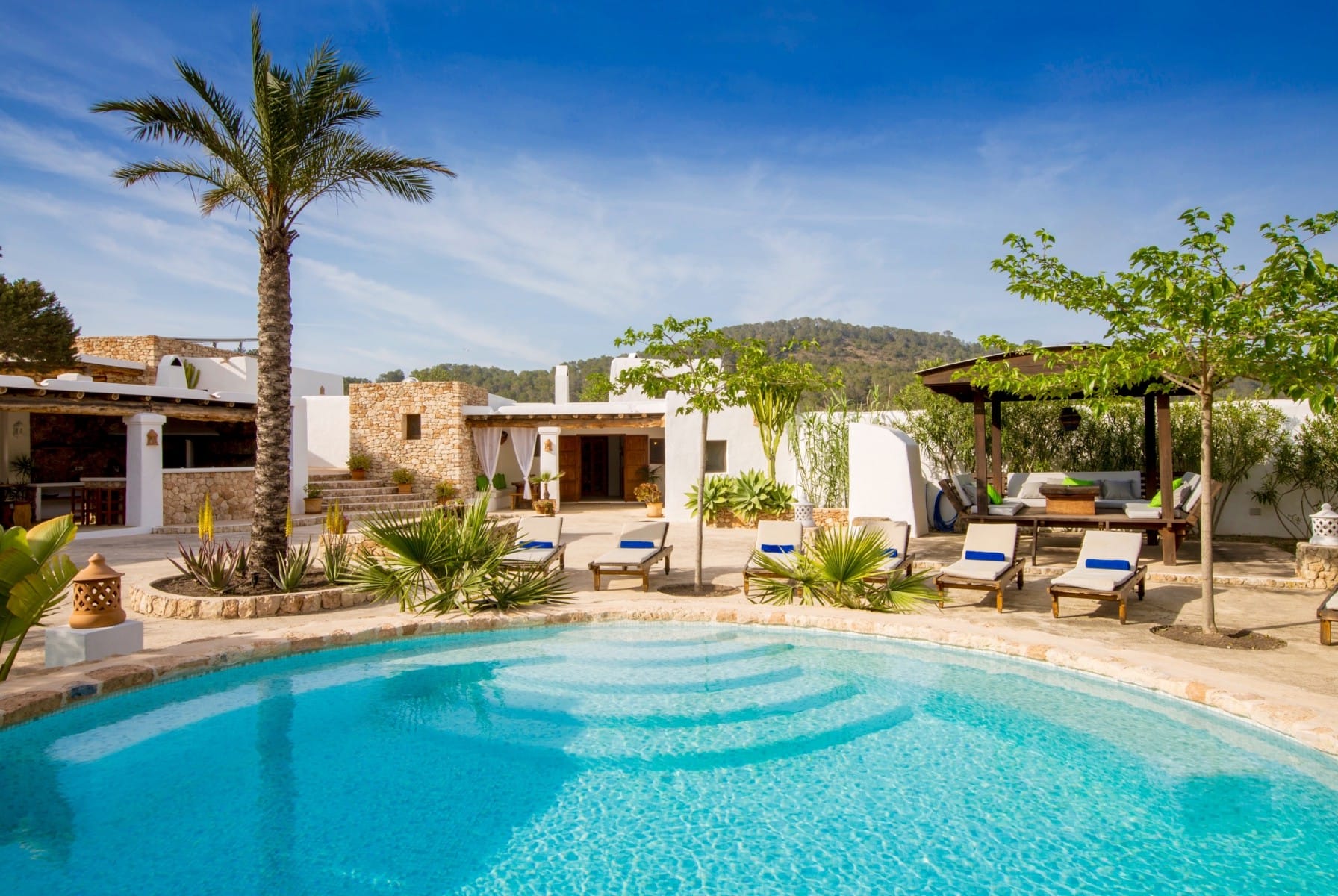
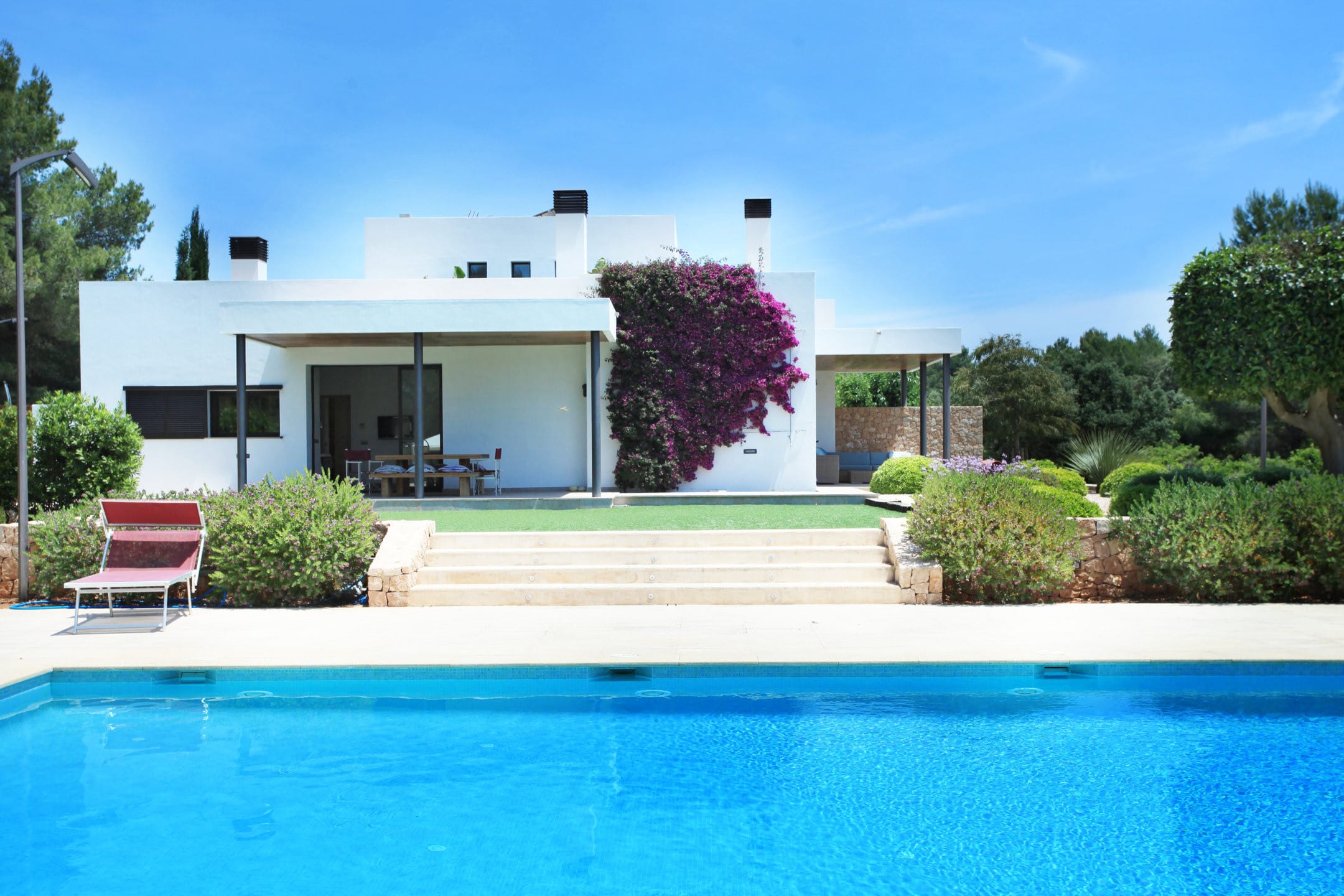
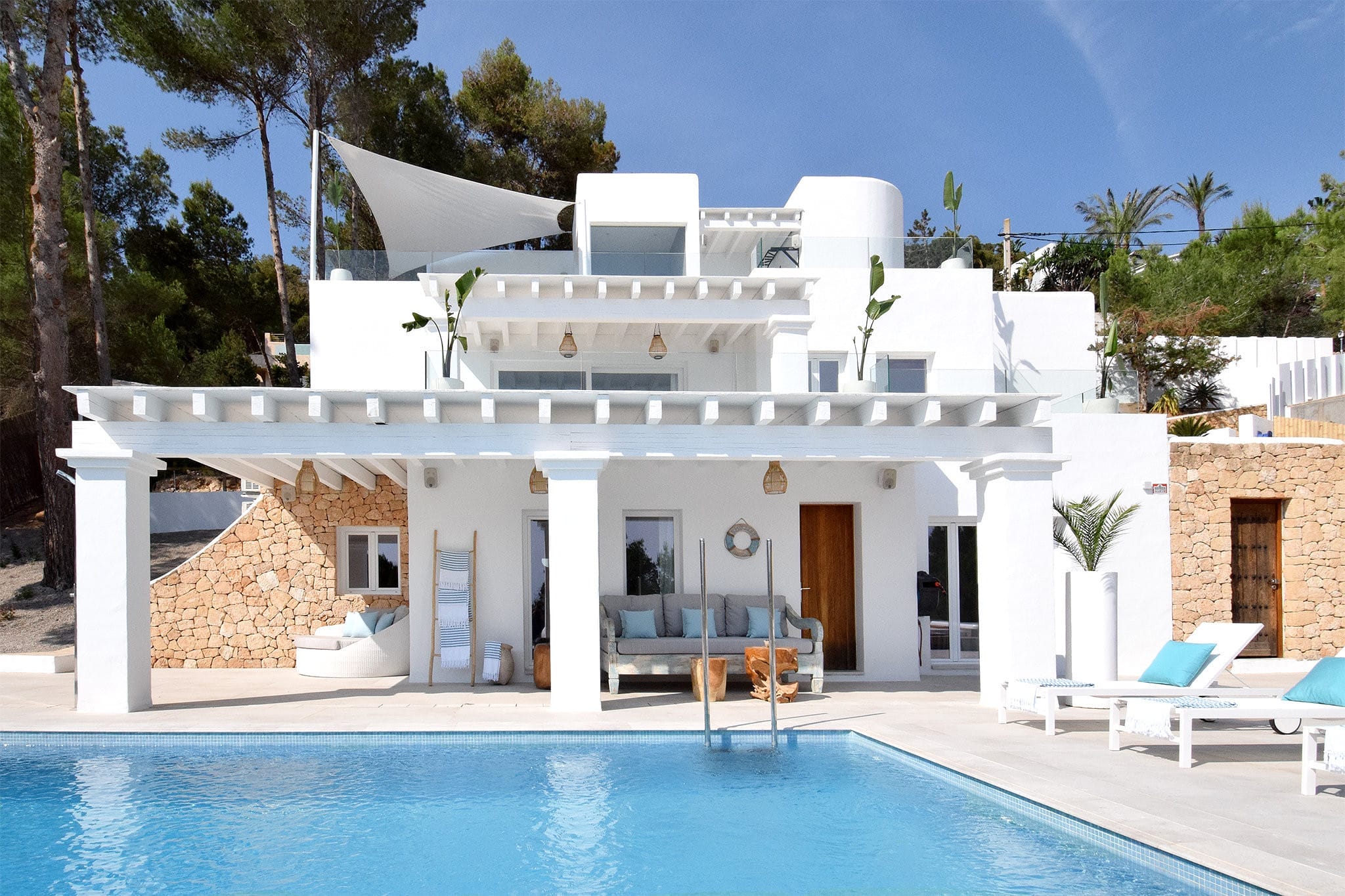
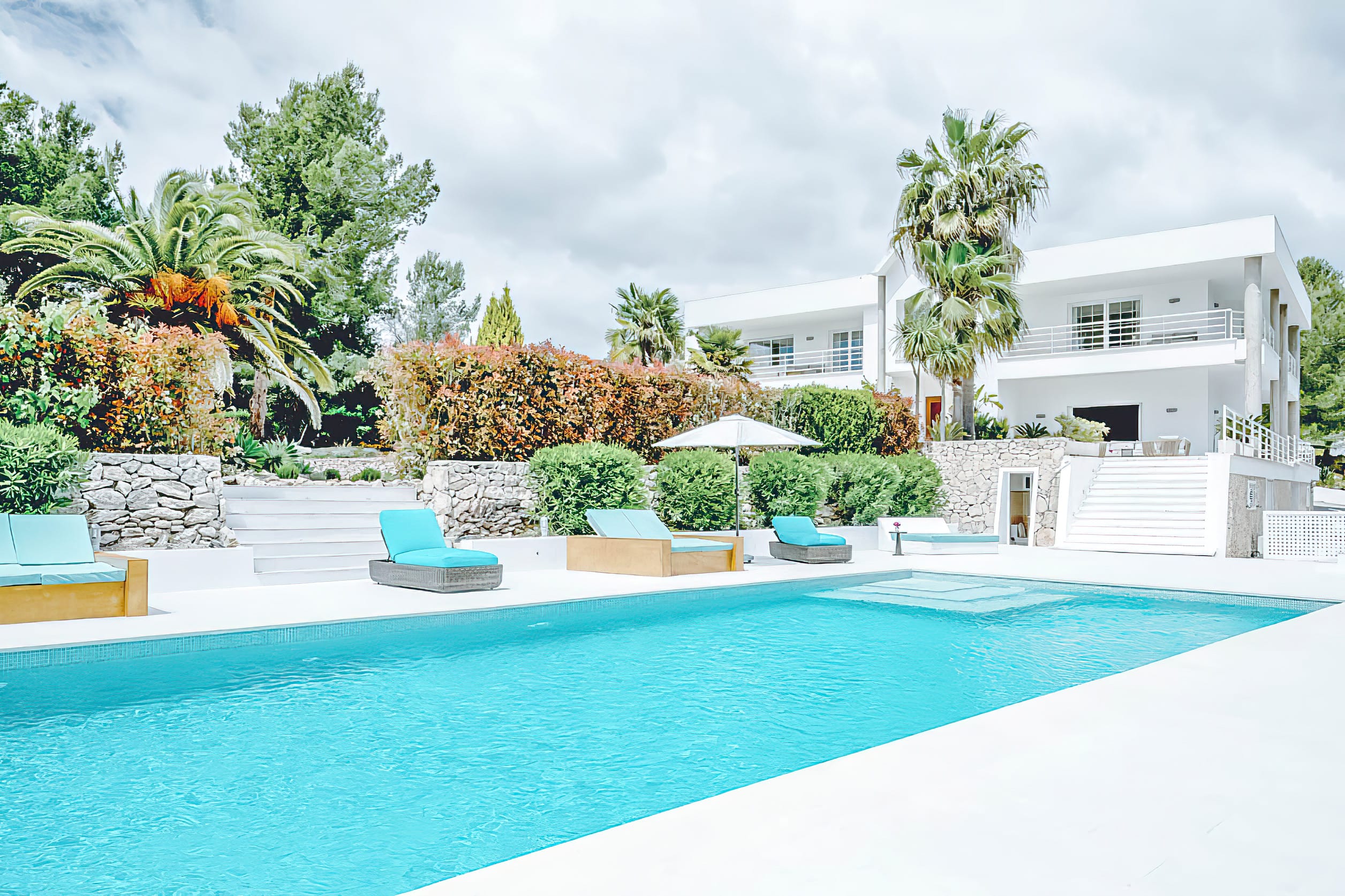
Ibiza is among the most expensive real estate markets in Spain. The average price for an apartment in good condition starts from €4,000–€6,000/m² in the central areas and easily exceeds €10,000/m² for luxury villas with panoramic views or sea access.
The main areas:
Eivissa city (Ibiza Town): the historic center, Dalt Vila, is a UNESCO World Heritage Site. Prestigious apartments, but few available and very high prices. Excellent short-term rental income for those with a license.
Jesús and Talamanca: highly sought-after semi-central area. Balance between accessibility and quality of life. Ideal for those who want to be close to the city without living in it.
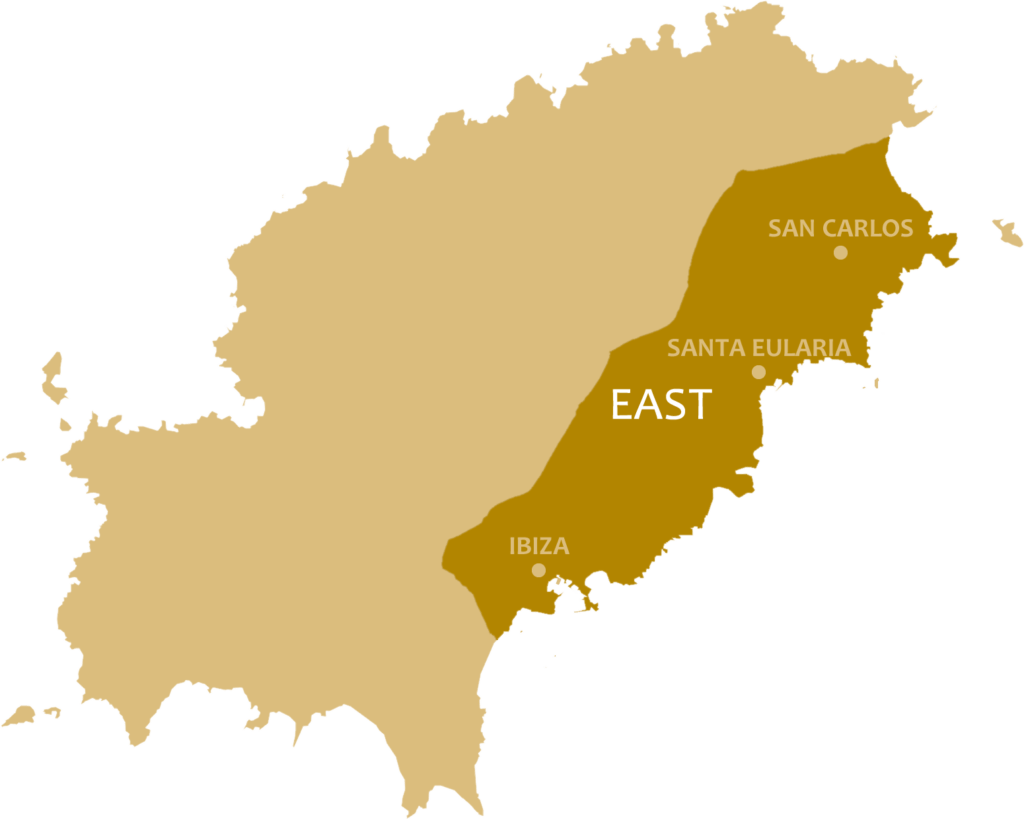
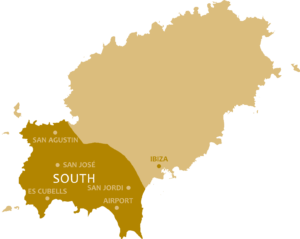
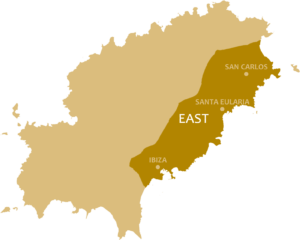
Santa Eulària des Riu: the quietest and most “residential” area of the island. Highly sought after by families. Excellent quality of life, good services, slightly lower prices than the south.
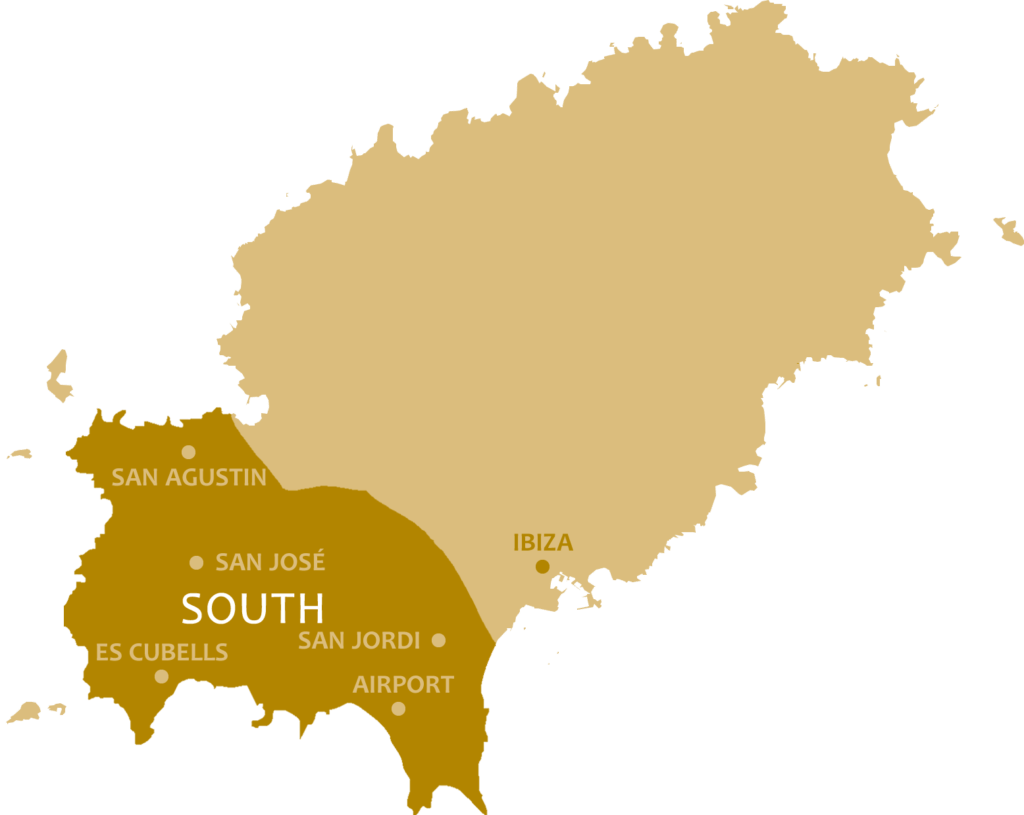
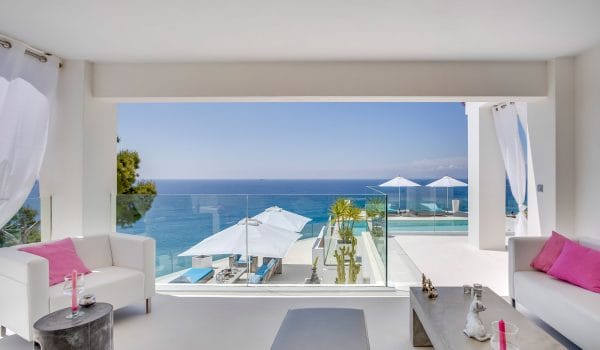
San José and its surroundings (Cala Tarida, Cala Conta, Cala Jondal): the most aspirational area. Breathtaking landscapes, luxury fincas, the hottest market. The prices here reach European peaks.
San Antonio: more popular and touristy, more affordable prices but short-term rental yields harder to optimise without a license.
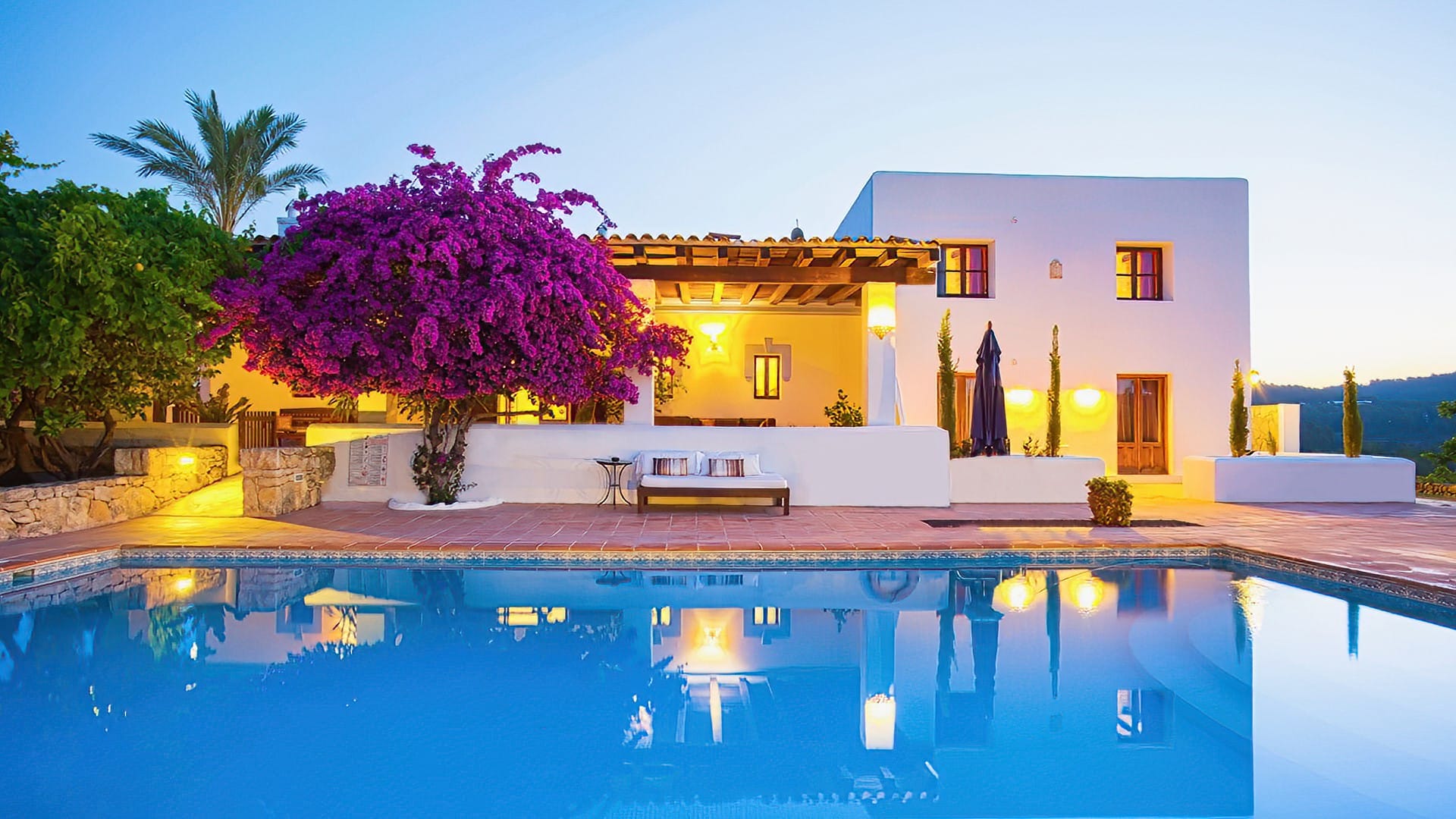
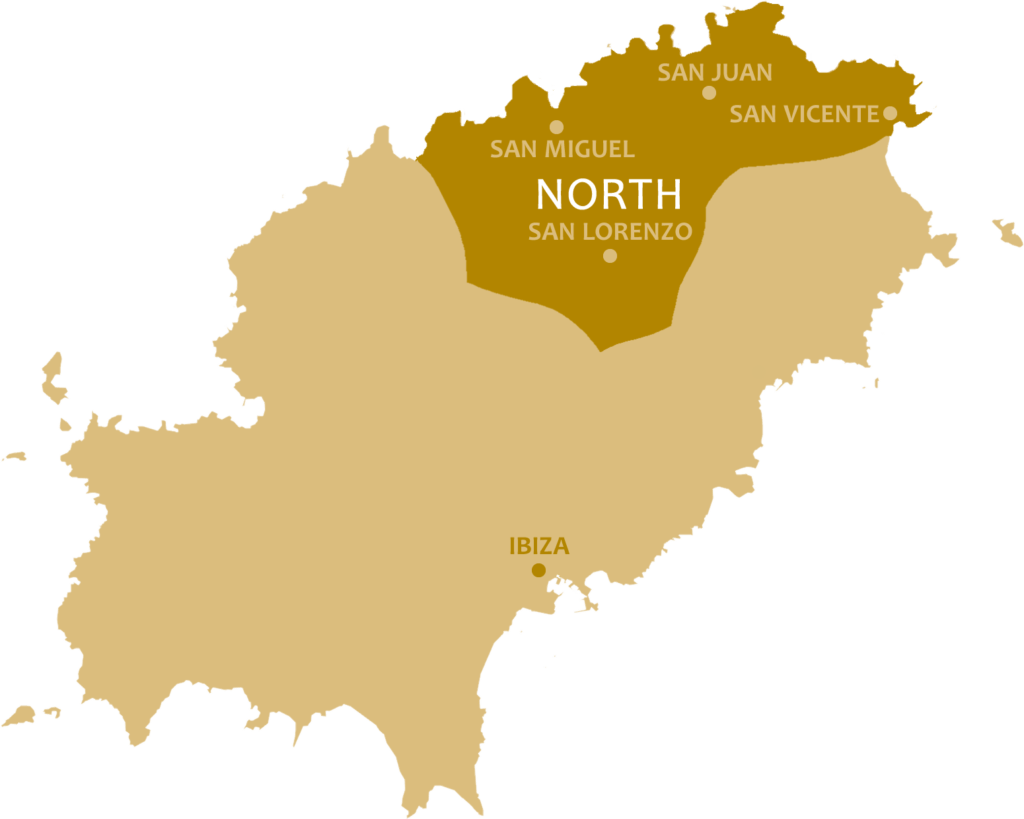
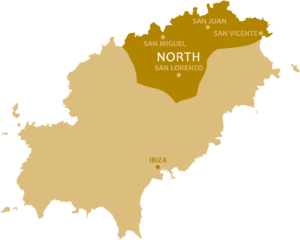
The north (Sant Joan, Portinatx, Sant Miquel): nature, authenticity, rustic estates. The market is growing, driven by those seeking an alternative to the crowded coast.
The tourist license:
It’s the hot topic. The government of the Balearic Islands has blocked the issuance of new licenses for short-term tourist rentals. Anyone buying a property already equipped with a license is acquiring a huge competitive advantage — and paying for it accordingly. A property with a license can be worth 30–50% more than a similar one without.
5. The search for the property: agent, lawyer, or do-it-yourself?
In Ibiza, there exists a dual real estate market: the one visible on international portals and the hidden one, which circulates among local agents and trusted networks.
Real estate agencies:
Choose agencies with a solid presence on the island, preferably associated with API (Property Agents).
The agent’s commission in Spain is generally 3 and 5% of the sale price and is usually paid by the seller. In some cases, it is split between both parties. Clarify this point before signing any assignment.
The lawyer:
In Spain, it is not mandatory to have a lawyer to buy a house, but it is highly recommended, especially for foreigners. A good lawyer:
Check the cadastral and urban planning regularity of the property Check for any mortgages, encumbrances, or debts associated with the property Verify the status of the tourist license (if present) Handle the fiscal due diligence
Prepares or reviews the preliminary contract Represents you at the deed if you have signed a power of attorney
The cost ranges between 1% and 1.5% of the property’s value. It’s money well spent.
Beware of agencies that “offer” a lawyer as well:
A lawyer recommended by the same agency that sells the property might have a conflict of interest. Choose your lawyer independently.
6. The step-by-step purchasing process
Step 1 — The purchase proposal (oferta de compra)
After pinpointing the property, a written offer is made to the seller, or their representative. This offer typically includes a symbolic deposit, ranging from €1,000 to €5,000, to demonstrate genuine intent. The proposal outlines the proposed price and the desired schedule.
If accepted, it moves to the preliminary contract.
Step 2 — The preliminary contract (contrato de arras)
There are three types, but the most common in residential real estate is the contrato de arras penitenciales (art. 1454 of the Spanish Civil Code):
The buyer pays a deposit, usually 10% of the purchase price. If the buyer withdraws, they lose the deposit. If the seller withdraws, they return double the deposit.
Before signing this contract, your lawyer must have already completed the basic due diligence: check at the Property Registry, license verification, absence of debts on the property.
Step 3 — The thorough due diligence
Between the preliminary agreement and the deed of sale, your lawyer verifies:
Simple note from the Property Registry (mortgage situation, ownership, encumbrances)
Cadastral certificate (correspondence between plans and physical reality)
Urban planning situation (is the property compliant with building regulations?) Are there any unsanctioned alterations? Condominium debts (are the community fees paid?) IBI (is the property tax up to date?) Energy certificate (mandatory for sale)
Situation of the tourist license (if applicable)
This passage is crucial. In Ibiza, it is not uncommon to find cases of fincas with illegal extensions, unregulated changes of use, or properties built in areas of special environmental protection. Your lawyer must check everything.
Step 4 — The deed (public deed of sale)
The signing takes place in front of a Spanish notary. The notary is a public guarantee figure: verifies the identity of the parties, the formal regularity of the deed, and provides legal certainty to the transaction.
Payment is typically made via bank cashier’s check (cheque bancaire) or bank transfer. The notary hands over a copy of the signed deed, and the deed is subsequently registered in the Property Registry.
7. The purchase taxes: how much to really spend
This is the part that many buyers underestimate. In Spain, and particularly in the Balearic Islands, the tax burden on real estate purchases is significant. You need to budget an additional 10–13% on top of the purchase price.
Second-hand property — ITP (Impuesto sobre Transmisiones Patrimoniales) It is the main tax for the purchase of used properties. In the Balearic Islands, it ranges from 8% to 13%, with progressive rates:
Property Value
Rate Up to €400,000 | 8%
From €400,001 to €600,000 | 9%
From €600,001 to €1,000,000 | 10%
Over €1,000,000 | 13%
New property (first sale from the builder) — VAT + AJD
VAT: 10% on the value of the property AJD (Documented Legal Acts / stamp duty): 1.2% in the Balearic Islands
Notary and registration fees They vary based on the value of the property, but approximately:
Notary: 0.2–0.5% of the value Registration in the Register: 0.1–0.3%
Lawyer’s fee As mentioned: 1–1.5% of the value.
Indicative summary of additional costs
For a property worth €500,000, expect:
Total accessory costs: around €53,000–56,000
8. The mortgage in Spain: is it possible for foreigners?
Yes, Spanish banks grant mortgages to non-resident foreigners, but with more conservative conditions compared to residents.
What to expect:
LTV (Loan to Value): Banks usually finance a maximum of 60–70% of the property’s value for non-residents (vs. up to 80% for residents).
Rate: fixed or variable (Euribor + spread). The fixed rate has been more requested in recent years due to its predictability.
Documentation: latest income tax returns (from the country of residence), bank statements, employment contract or company financial statements, asset documentation
The most active banks in the foreign mortgage segment in Ibiza include Santander, BBVA, CaixaBank, and Sabadell. It’s worth comparing at least two or three offers.
If your profile is complex (self-employed, income in multiple countries, non-liquidable assets), consider a mortgage broker with experience in the Ibizan market. The service has a cost but it can save you a lot in terms of the conditions obtained.
9. The Golden Visa
buy and obtain residency Anyone who purchases a property valued at or above €500,000 can apply for the Spanish Golden Visa (Visado de Inversor), which grants the right to reside in Spain.
Main features:
Initial residence permit of 2 years, renewable to 5, then permanent Extended to the family unit (spouse, dependent children, parents) Freedom to work in Spain Free access to the Schengen area Does not require residing in Spain for more than one day a year
Important note: The Spanish government has discussed on several occasions the possibility of abolishing or reforming the program. Before relying on the Golden Visa as the main motivation for the purchase, check the updated regulatory status with a lawyer.
10. Taxes after the purchase: the tax life of the foreign owner
Buying is just the beginning. As an owner, you will have tax obligations in Spain, regardless of where you reside.
IBI — Impuesto sobre Bienes Inmuebles . It is paid annually to the municipality, calculated on the cadastral value of the property (generally much lower than the market value). Depending on the area and the characteristics of the property, it ranges from a few hundred to a few thousand euros per year.
IRNR — Non-Residents Income Tax If you are not a tax resident in Spain, you are subject to the IRNR. You have two possible situations:
Unrented property:
Even if you don’t rent, Spain assumes a “deemed income” calculated at 1.1% or 2% of the cadastral value. On this amount, a 19% tax is applied for EU/EEA citizens, or a 24% tax for non-EU citizens.
Rented property:
Rental income is taxed in Spain. EU citizens can deduct related expenses (mortgage interest, maintenance, insurance, etc.); non-EU citizens in most cases no. The rate is always 19% (EU/EEA) or 24% (non-EU) on net or gross income respectively.
Declaration:
The IRNR declaration is submitted quarterly (if you rent) or annually (if you do not rent), using the Modelo 210 form. A local accountant is essential to handle this correctly.
11. The tourist license: everything you need to know
It is probably the hottest — and most misunderstood — topic in the Ibiza real estate market.
What happened:
In 2017, the Balearic Islands passed a law that froze the issuance of new licenses for short-term tourist rentals (less than 31 days). Since then, the total number of licenses on the island has been fixed. No new licenses are being issued.
What it means for buyers:
If you purchase a property that already has a tourist license, you can continue to rent it out for tourism. The license is transferable along with the property.
If you purchase a property without a license, you cannot rent it to tourists for short stays. However, you can rent it out long-term (contracts longer than 31 days), subject to residential rental laws.
How to verify the license:
Your lawyer must verify with the Tourist Registry of the Balearic Islands that the license is valid, active, and transferable. Attention: some licenses have specific conditions (related, for example, to the number of beds or the characteristics of the facility) that must be respected.
The value of the license on the price:
As already mentioned, a property with a tourist license is worth significantly more. It is not uncommon to see two identical fincas in the same neighbourhood with a price difference of 40–50% attributable solely to the license. In some cases, the license alone is valued at hundreds of thousands of euros.
12. Pitfalls to avoid: the most common mistakes
1. Not conducting urban planning due diligence
In Ibiza, there are properties with illegal extensions or built in protected landscape areas. Regularisation can be impossible or extremely expensive. Always check first.
2. Trust only the real estate agent
The agent usually works for the seller. Your lawyer works for you. Don’t confuse the roles.
3. Not checking the debts on the property
In Spain, debts related to the property (overdue IBI, unpaid condominium fees, outstanding mortgages) transfer with the ownership. Always verify before the deed of sale.
4. Underestimating additional costs
The 10–13% more compared to the purchase price is not negligible. On a property worth €800,000, we’re talking about an additional €80,000–100,000. Plan your liquidity accordingly.
5. Believing that the tourist license “transfers automatically”
The license is transferable, but the process must be handled correctly. There are technical timelines and mandatory communications to the regional authority. Have your lawyer do it.
6. Buy quickly during the season Ibiza in summer is hypnotic. Vacation enthusiasm is the worst advisor in a real estate negotiation. Take the necessary time, visit the properties even in winter, and don’t let yourself be pushed by false urgencies.
13. Final checklist for the foreign buyer
Before signing the deed, make sure you have completed these steps:
NIE obtained and valid Spanish bank account opened Independent lawyer appointed Verified nota simple (no mortgage or hidden lien) Cadastral situation verified Urban planning compliance confirmed IBI and community fees in order Tourist license verified (if applicable) Energy certificate of the property received Liquidity for ancillary costs available (10–13%) Post-purchase tax situation planned with an accountant
Conclusion: Is Ibiza still a good investment?
Yes — as long as you enter with awareness.
The Ibiza market does not forgive superficiality: high prices leave little room for error, bureaucracy is real, and the tourist license is an increasingly rare asset. But for those who move with the right professionals, with adequate liquidity, and with a clear strategy, Ibiza remains one of the most solid real estate markets in Europe.
Demand does not stop. The island is not growing. And people keep arriving from all over the world.
Contact us, we are Licensed Real Estate Agency in Ibiza and Balearic Islands